
Ever wondered why some office furniture gets all the buzz while other pieces sit quietly in catalogs? The phenomenon of “hype” furniture—those trendy, talked-about chairs and desks that flood your social media feeds—has transformed how we think about workplace design. But is all this excitement just clever marketing, or is there substance behind the style? As remote work continues to reshape our relationship with office spaces, the furniture we choose has never been more important. In this article, we’ll cut through the noise and explore whether these conversation-starting pieces deliver real value or if they’re just empty promises wrapped in sleek packaging. Whether you’re outfitting a home office or refreshing a corporate space, understanding the truth about hype furniture could save you thousands while potentially transforming your work experience.
-

1.6m Straight Desk Dark Oak with Fixed Pedestal
R7.518,21 Add to basket -

1.6m Straight Desk with Fixed Pedestal
R7.518,21 Add to basket -

2.2m Dark Oak Executive Desk with Matching Fixed Credenza
R16.956,31 Add to basket -
Promo 17% New

2000mm STLA18-20 MDF Desk & Credenza Set
Original price was: R14.500,00.R11.999,00Current price is: R11.999,00. Add to basket -

2m Dark Oak Executive Desk with Matching Fixed Credenza
R13.971,23 Add to basket -
Promo 5%

Absolute Mahogany Desk with Credenza & Mobile Pedestal
Original price was: R19.999,00.R18.999,00Current price is: R18.999,00. Add to basket -

Alice Executive L Shaped Desk BowFront
R13.199,00 Add to basket -

Angled Leg Desk With Cable and USB
Read more -
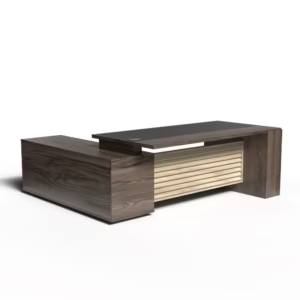
Arcade L Workstation
R25.999,00 Add to basket -
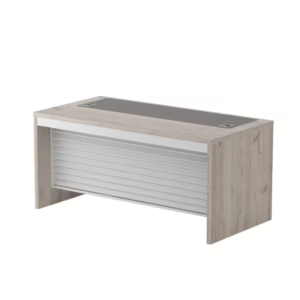
Atari Admin Desk
R8.999,00 Select options This product has multiple variants. The options may be chosen on the product page -
Promo 23%

Athena Executive Desk Royal Mahogany Veneer Set
Price range: R20.999,00 through R32.411,00 Select options This product has multiple variants. The options may be chosen on the product page -
Promo 16%

Atlanta Executive Mahogany Desk
Original price was: R25.677,83.R21.500,00Current price is: R21.500,00. Add to basket -
Promo 3%

Atlantic Executive Veneer Desk + Credenza + Pedenza
Original price was: R22.590,00.R21.999,00Current price is: R21.999,00. Select options This product has multiple variants. The options may be chosen on the product page -
Promo 9%

B002 Prism Executive Desk Executive Veneer Desk 3 Set
Original price was: R25.228,00.R22.849,00Current price is: R22.849,00. Add to basket -
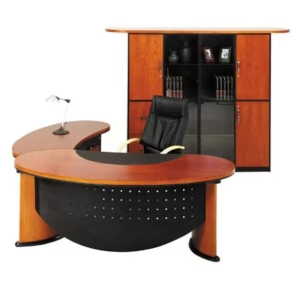
Bean Executive Curved Desk
Read more -
Promo 12%

Boston B040 Executive Desk
Original price was: R32.999,00.R28.999,00Current price is: R28.999,00. Add to basket -
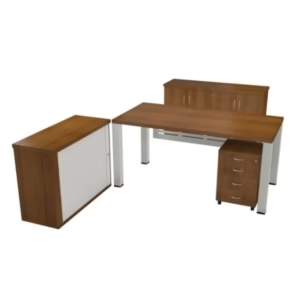
Cardiff Set+ Roller Door Credenza
R9.999,00 Add to basket -

Cardiff with Bent legs L Shaped Desk and Credenza
R16.590,00 Add to basket -
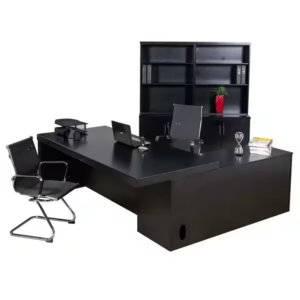
CEO Executive Desk
R28.500,00 Add to basket -
Promo 27%

Chicago Executive Desk – Veneer Desk
Original price was: R29.890,00.R21.689,00Current price is: R21.689,00. Select options This product has multiple variants. The options may be chosen on the product page -

Cordia Double Pedestal Desk | Desk Only
Price range: R16.999,00 through R18.999,00 Select options This product has multiple variants. The options may be chosen on the product page -
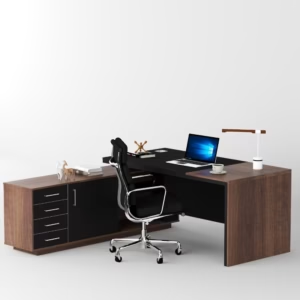
Cornerstone Executive Workstation Pedenza L Shape Desk
R13.999,00 Add to basket -
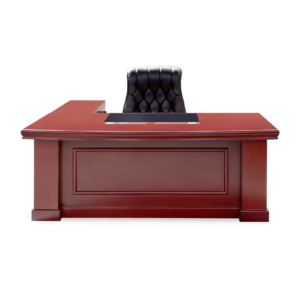
CoZee Veneer Desk Set Mobile Pedenza Royal Mahogany
Price range: R16.499,00 through R17.599,00 Select options This product has multiple variants. The options may be chosen on the product page -
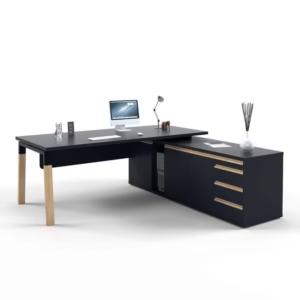
Crestwood L-Combination Desk with Pedenza (Melamine)
R24.989,00 Add to basket


What Makes Office Furniture “Hype-Worthy”?
Let’s face it—not all office furniture creates a buzz. So what exactly separates standard office equipment from the pieces that generate intense publicity and waitlists?
Hype office furniture typically combines three key elements: innovative design, ergonomic breakthroughs, and cultural relevance. Take the Herman Miller Aeron chair, for instance. When it debuted in 1994, its mesh design and scientific approach to seating created such demand that it became a status symbol during the dot-com boom. Fast forward to today, and you’ll find similarly passionate followings for brands like Steelcase, Humanscale, and newer entrants like Branch and Fully.
According to industry research, furniture that generates significant buzz typically sees a 40% higher engagement rate on social media and can command price premiums of 25-60% compared to functionally similar alternatives. That’s substantial marketing power!
-
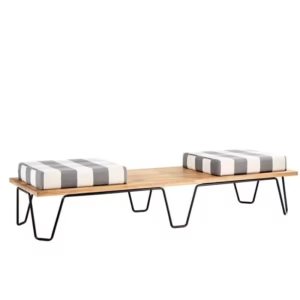
Alexis Bench Wooden Bench Alexis
Read more -
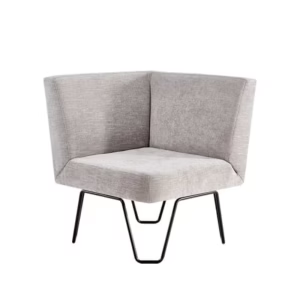
Aloe Accent Multipurpose Chair
R9.074,00 Add to basket -

Andora Wingback – Dining Room Chair
R3.980,00 Add to basket -

Anna Coffee Table 600
R2.644,00 Add to basket -
New

Astina Upholstered Chair
Price range: R5.999,00 through R6.500,00 Select options This product has multiple variants. The options may be chosen on the product page -

Barberton Double Seater Leather Couch
R9.999,00 Add to basket -
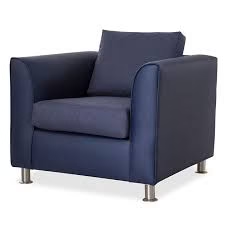
Barberton Single Seater – One Seater Leather Couch
R4.899,00 Add to basket -

Barcelona Dining Chairs – Soft Tub Chair
R5.999,00 Add to basket -

Calgary Dining Chair
R2.559,00 Add to basket -
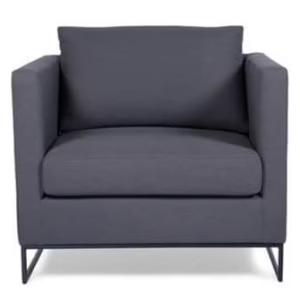
Candice Single Seater Occasional Chair
R6.999,00 Add to basket -
Promo 3%

Chelsea Dining Chair -Single Seater Couch
Original price was: R6.193,00.R5.999,00Current price is: R5.999,00. Add to basket -
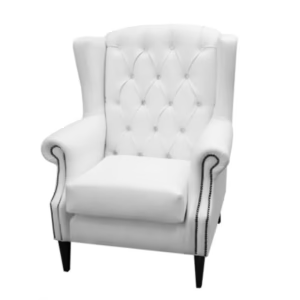
Chesterfield Armchair White
R5.789,00 Add to basket -
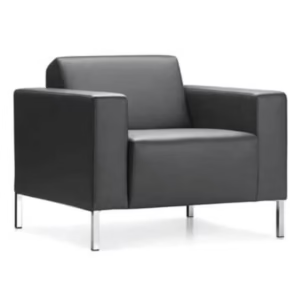
Core Single Occasional Chair
R5.001,00 Add to basket -
Dawn Multipurpose Chair
Read more -
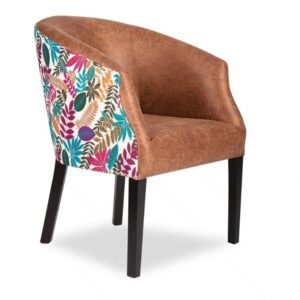
Delhi Armchair Vulcan
R4.999,00 Add to basket -

Durban Double Seater Couch
R8.049,00 Add to basket -
Promo 13%

Durban Single Seater Couch
Original price was: R5.749,00.R4.999,00Current price is: R4.999,00. Add to basket -

Havana Double
R8.049,00 Add to basket -

Havana Single Couch
R4.506,00 Add to basket -

Havana Slipper Couch – Single Slipper and Double Slipper Couch
R5.289,00 Add to basket -

Helsinki single Couch Green and Black
R6.890,00 Add to basket -
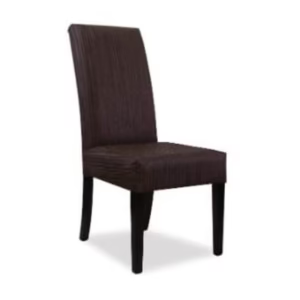
Israel Dining Chair
R2.999,00 Add to basket -

Kiev Double Tub | Vulcan Tub
Price range: R6.999,00 through R9.500,00 Select options This product has multiple variants. The options may be chosen on the product page -
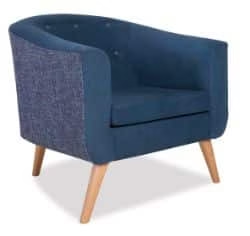
Kiev Single Tub Chair
R6.439,00 Add to basket


Are Hyped Office Chairs Actually Better for Your Health?
This is perhaps the most important question when evaluating whether trendy office chairs deserve their reputation. The answer? Often, yes—but with some important caveats.
Chairs that generate significant publicity typically do incorporate advanced ergonomic features. The Steelcase Gesture, for example, resulted from a global posture study of 2,000 people across six continents. Its design specifically addresses the multiple postures people adopt when using various modern devices.
Health experts suggest that truly ergonomic chairs can reduce the risk of musculoskeletal disorders by up to 59%, according to a study published in the Journal of Occupational Health. When you consider that back pain costs American employers more than R 1100 billion annually in lost productivity and healthcare costs, investing in quality seating starts to look less like luxury and more like necessity.

However, not all hyped chairs deliver equal benefits. Some gain popularity through aesthetic appeal or celebrity endorsements rather than ergonomic excellence. The key is looking beyond the marketing to examine the specific features that address your body’s needs.
The Psychology Behind Desk Hype: Status, Productivity, or Both?
Standing desks and smart workstations have generated tremendous buzz in recent years. But their popularity isn’t just about health claims—there’s powerful psychology at work too.
Research from Harvard Business Review suggests that our workspace design significantly impacts our psychological wellbeing, with employees reporting up to 32% higher job satisfaction when working at desks they perceive as premium or progressive. This psychological boost can translate to measurable productivity improvements.
The famous “desk flex” has become a staple of work-from-home social media, where displaying certain brands or configurations signals membership in a particular professional tribe. Interestingly, this status signaling isn’t new—executive desks have long been symbols of organizational hierarchy.
The difference today is that hyped desks often combine this status element with genuine functionality improvements. The Uplift V2, for example, gained its following not just through marketing but through its stability and range of height adjustments that outperform many competitors.
Are Trendy Office Furniture Prices Justified?
Let’s talk money—the aspect that makes many buyers hesitate when considering hyped furniture.
Premium office chairs often range from R500-1,500, while trending desks can easily exceed R1,000. Compared to budget alternatives available for less than half these prices, the difference is substantial.
However, cost analysis needs to consider longevity. Many hyped furniture pieces offer warranties ranging from 5-12 years, compared to 1-2 years for budget alternatives. When calculating cost-per-year-of-use, the premium options often prove more economical.
Additionally, resale value matters. A three-year-old Herman Miller or Steelcase chair typically retains 50-70% of its original value on the secondary market, while budget brands may have essentially no resale value. This creates a significantly lower true ownership cost than the initial price suggests.
How to Separate Genuine Innovation from Marketing Fluff
Not all hype is created equal. Here’s how to tell if a buzzy office furniture piece is worth your attention:
- Verify the warranty – Companies truly confident in their products back them with substantial guarantees
- Check for independent testing – Look for BIFMA certification or other industry standards
- Read reviews from long-term users – Initial impressions often differ from year-two experiences
- Investigate adjustability ranges – More adjustment points generally mean better fit for diverse body types
- Research the materials – Quality differences often hide in details like the type of aluminum, mesh, or foam used
Remember, trendy doesn’t automatically mean better. Some classic designs have remained popular for decades precisely because they work so well.
When Is Hyped Office Furniture Worth the Investment?
The smart approach isn’t automatically buying or dismissing trendy furniture—it’s knowing when the investment makes sense for your specific situation.
Consider premium, hyped furniture when:
- You work from your desk more than 6 hours daily
- You’ve experienced discomfort with standard furniture
- You plan to keep the furniture for 5+ years
- Your work requires sustained focus or creativity
- You have specific body needs not met by standard designs
Conversely, standard furniture may suffice when:
- Your desk time is limited or intermittent
- You’re furnishing a temporary space
- Your budget is severely constrained
- You haven’t experienced discomfort with standard options
The key is honest assessment of your needs rather than responding to marketing pressure or social media influence.
Hype in office furniture isn’t inherently good or bad—it’s a market response that sometimes highlights genuinely innovative products and sometimes merely creates artificial demand. The wisest approach is looking beyond the buzz to evaluate what a specific chair or desk would mean for your daily work experience.
Quality office furniture represents an investment in your health, productivity, and comfort that few other purchases can match in impact. A chair or desk that truly supports your body and work style will deliver returns every single day, whether it’s Instagram-famous or not.
Before making your next office furniture purchase, ask yourself: Am I buying this because everyone else is, or because it solves a real problem in my work setup? The answer will guide you to choices you’ll be happy with long after the hype has moved on to the next big thing.