
The Complete Guide to Leather Office Chairs: Types, Benefits & Care (2025)
When upgrading your workspace, few investments make as significant an impact as a high-quality leather office chair. These premium seating solutions transform not just the aesthetics of your office but also your comfort, productivity, and even long-term health. With countless options available, from genuine leather executive chairs to faux leather alternatives, navigating the world of leather office seating can be overwhelming. This comprehensive guide will walk you through everything you need to know about selecting, using, and maintaining the perfect leather office chair for your workspace.
Why Choose Leather for Your Office Chair?
Leather office chairs stand out in the furniture market for several compelling reasons:
-
Promo 17%
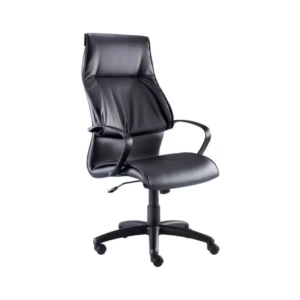
7600 Leather Office Chair
Price range: R2.999,00 through R3.999,00 Select options This product has multiple variants. The options may be chosen on the product page -

Alu Comfort High Back
R12.450,00 Add to basket -
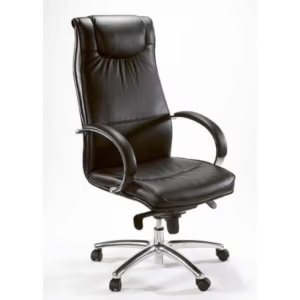
Alu High Back Leather High Back
R9.774,00 Add to basket -
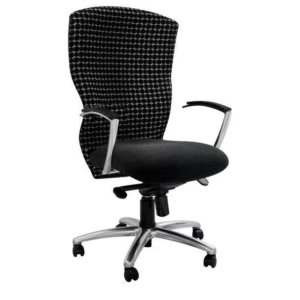
Aruba Office Chair Range
Price range: R3.650,00 through R6.950,00 Select options This product has multiple variants. The options may be chosen on the product page -
Promo 17%

Beijing DB016 Genuine Leather Visitor’s Chair
Original price was: R6.350,00.R5.250,00Current price is: R5.250,00. Add to basket -
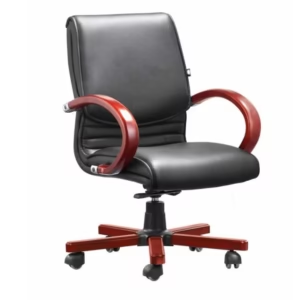
Beijing Genuine Leather Medium Back Office Chair
R7.187,00 Add to basket -
Promo 9%

Beijing High Back Genuine Leather Office Chair
Original price was: R13.196,00.R11.999,00Current price is: R11.999,00. Add to basket -
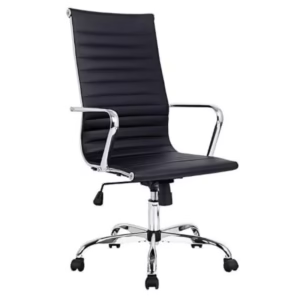
Black Leather High Back Swivel & Tilt Office Chair – Blaze Chrome
Read more -
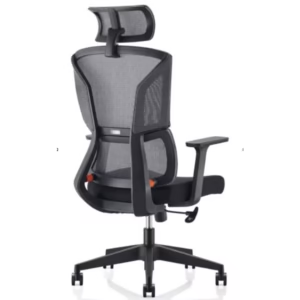
C4001 Mesh High Back Chair
R3.560,00 Add to basket -
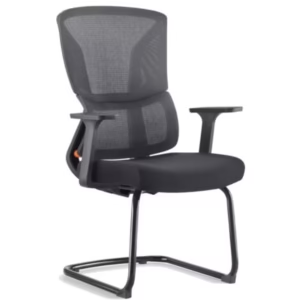
C4001B Mesh Visitor Chair
R2.690,00 Add to basket -

Charles Office Chair
R6.799,00 Select options This product has multiple variants. The options may be chosen on the product page -
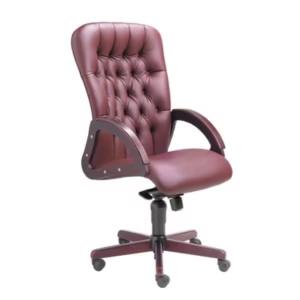
Classic Buttoned Chair Genuine Leather High Back Chair
R5.850,00 Add to basket -

Classic Cushioned Chair High Back, Medium Back & Visitors
Price range: R3.899,00 through R5.184,00 Select options This product has multiple variants. The options may be chosen on the product page -
Promo 16%
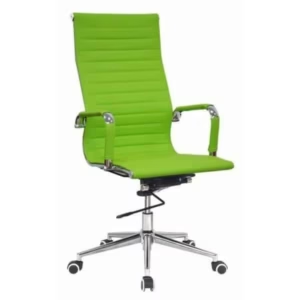
Classic Eames Office Chair – Green
Price range: R3.784,00 through R4.590,00 Select options This product has multiple variants. The options may be chosen on the product page -
Promo 27%

Classic Eames Repro Office Chair – Orange Colour
Price range: R2.999,00 through R3.999,00 Select options This product has multiple variants. The options may be chosen on the product page -
Promo 24%

Classic Eames Camel
Price range: R2.999,00 through R3.999,00 Select options This product has multiple variants. The options may be chosen on the product page -

Classic Eames Flat Cushion Black Colour
Price range: R3.784,00 through R4.941,00 Select options This product has multiple variants. The options may be chosen on the product page -

Classic Eames Flat Cushion Brown Colour
Price range: R3.784,00 through R4.841,00 Select options This product has multiple variants. The options may be chosen on the product page -
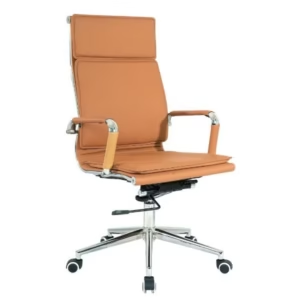
Classic Eames Flat Cushion High Back Beige
Read more -

Classic Eames Flat Cushion White
Price range: R3.541,00 through R5.275,00 Select options This product has multiple variants. The options may be chosen on the product page -
Promo 12%
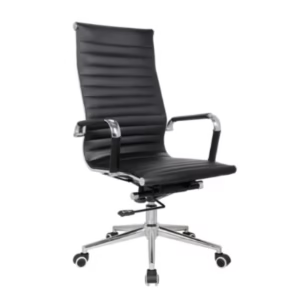
Classic Eames High Back Office Chair
Price range: R3.630,00 through R4.560,00 Select options This product has multiple variants. The options may be chosen on the product page -
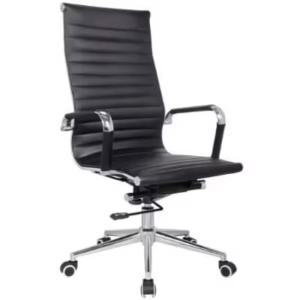
Classic Eames Leather High Back Chair – Genuine Leather
Price range: R6.047,00 through R7.999,00 Select options This product has multiple variants. The options may be chosen on the product page -
Promo 21%

Classic Eames Leather Office Chair
Price range: R2.590,00 through R3.999,00 Select options This product has multiple variants. The options may be chosen on the product page -
Promo 21%

Classic Eames Leather Office Chair
Price range: R2.590,00 through R3.999,00 Select options This product has multiple variants. The options may be chosen on the product page

Superior Durability and Longevity
Quality leather chairs aren’t just purchases—they’re investments. According to a 2024 office furniture durability study by the Business Furniture Association, genuine leather chairs typically last 7-10 years with proper care, compared to just 2-4 years for most fabric alternatives. This extended lifespan often makes leather chairs more economical in the long run despite their higher upfront cost.
“High-quality leather develops character over time rather than wearing out,” explains Dr. Marcus Chen, furniture materials specialist at the Institute for Sustainable Design. “When properly maintained, full-grain leather can look better after years of use, developing a rich patina that synthetic materials simply cannot replicate.” (Sustainable Materials Journal)
Professional Aesthetic Appeal
Leather chairs immediately elevate the appearance of any workspace. Their timeless elegance conveys professionalism and attention to detail—qualities that matter whether you’re meeting with clients in person or appearing on video calls from your home office.
Temperature Regulation and Comfort
Despite misconceptions, quality leather breathes remarkably well. Unlike synthetic materials that can become uncomfortably warm, genuine leather naturally adapts to your body temperature—staying cooler in summer and warmer in winter. Research from the Workplace Comfort Institute indicates that employees using leather seating report 27% fewer temperature-related comfort complaints than those using synthetic upholstery. (Workplace Environment Research)
Types of Leather Used in Office Chairs
Not all leather is created equal. Understanding the different types helps you make an informed decision based on your budget and requirements:
Full-Grain Leather
The gold standard of leather quality, full-grain comes from the top layer of the hide and keeps the natural grain intact. Chairs upholstered with full-grain leather offer:
- Exceptional durability (10+ years with proper care)
- Natural breathability
- Development of a beautiful patina over time
- Highest resistance to moisture
These chairs represent the premium end of the market, typically ranging from ZAR 14,400-ZAR 54,000 depending on the chair’s other features.
Top-Grain Leather
A step down from full-grain, top-grain leather has had the uppermost layer sanded to remove imperfections, then treated with a finishing coat. This results in:
- Good durability (7-8 years typical lifespan)
- More uniform appearance than full-grain
- Thinner and more flexible material
- Lower cost (ZAR 9,000-ZAR 21,600 typical range)
Split Leather
Created from the lower layers of the hide after the top grain has been removed, split leather offers:
- Moderate durability (5-6 years)
- Less breathability than higher grades
- More affordable pricing (ZAR 5,400-ZAR 10,800)
- Often embossed with a leather-like pattern since it lacks natural grain
Bonded Leather
The most affordable “leather” option, bonded leather consists of leather scraps and fibers mixed with adhesives and applied to a backing:
- Limited lifespan (2-4 years before typical peeling begins)
- Minimal breathability
- Very affordable (ZAR 2,700-ZAR 7,200)
- Environmental benefits of using leather that would otherwise be wasted
Faux/PU Leather
Not actually leather but a synthetic alternative designed to mimic leather’s appearance:
- Variable lifespan depending on quality (typically 2-5 years)
- Entirely vegan/animal-free
- Most affordable option (ZAR 1,800-ZAR 5,400)
- Easier to clean but less breathable than genuine leather
According to the American Furniture Council’s 2024 consumer report, understanding these distinctions helps buyers make more satisfying chair purchases, with 72% of consumers who researched leather types beforehand reporting high satisfaction with their purchases versus just 43% of those who didn’t. (Furniture Consumer Insights)
Ergonomic Features to Look For
A truly exceptional leather office chair pairs premium materials with an advanced ergonomic design. When evaluating options, prioritize these adjustability features:
Lumbar Support
Look for chairs with adjustable lumbar support that can be positioned to match your spine’s natural curve. Premium models offer dynamic lumbar support that adapts as you move.
Seat Height and Depth
Your feet should rest flat on the floor with thighs parallel to the ground. Ideally, there should be 2-3 fingers’ width between the seat edge and the back of your knees. Advanced chairs offer seat depth adjustment to accommodate different leg lengths.
Armrest Adjustability
Multi-directional armrests allow customization in height, width, depth, and angle—ensuring proper support regardless of your build or work style.
Recline Mechanisms
Quality leather chairs often feature synchronized tilt mechanisms that maintain proper posture as you recline, allowing your body to move naturally throughout the day.
Headrest Position
For chairs with headrests, look for height and angle adjustability to support your neck precisely.
Ergonomics expert Dr. Sophia Williams of the Workplace Health Institute notes, “The ideal chair combines quality materials with adjustability. Even the most premium leather won’t compensate for a chair that doesn’t properly support your unique body structure.” (Ergonomic Workplace Solutions)
Leather Chair Maintenance and Care
Proper maintenance dramatically extends the life of your leather chair and preserves its appearance:
Regular Cleaning
- Weekly: Dust with a soft, dry cloth
- Monthly: Wipe down with a slightly damp cloth (distilled water only)
- Quarterly: Clean with a specialized leather cleaner appropriate for your leather type
Conditioning
Apply quality leather conditioner every 3-6 months to prevent drying and cracking. This is especially important for chairs in dry climates or near heating/cooling vents.
Spill Response
Address spills immediately by blotting (never rubbing) with a clean, dry cloth. For water-based spills on protected leather, a slightly damp cloth can help after blotting. For oil-based spills or stains on unprotected leather, consult a professional.
Positioning
Place your chair away from direct sunlight and heat sources, which can cause fading and premature aging of the leather.
Professional Maintenance
Consider professional cleaning and conditioning annually for premium leather chairs—especially those made from full-grain or top-grain leather.
The International Leather Council recommends, “Five minutes of proper care each month can add years to a leather chair’s useful life, making it one of the most time-efficient investments in furniture maintenance.” (Leather Care Institute)
Environmental Considerations
Modern consumers increasingly consider sustainability when purchasing office furniture:
Leather Production Ethics
Look for chairs using leather certified by the Leather Working Group (LWG), which ensures environmentally responsible manufacturing processes. Many premium manufacturers now provide transparency about their leather sourcing.
Longevity as Sustainability
A quality leather chair that lasts 10+ years represents significantly less environmental impact than replacing synthetic chairs every 2-3 years. The durability factor should be considered in any environmental calculation.
End-of-Life Options
Some manufacturers now offer take-back programs for leather furniture, ensuring proper recycling or repurposing of materials. When purchasing, inquire about eventual disposal options.
Cost Analysis: Investment vs. Value
The price range for leather office chairs varies dramatically:
- Entry-level/Faux Leather: ZAR 1,800-ZAR 5,400
- Mid-range/Split or Bonded Leather: ZAR 5,400-ZAR 12,600
- Premium/Top-Grain Leather: ZAR 12,600-ZAR 27,000
- Executive/Full-Grain Leather: ZAR 27,000-ZAR 54,000+
When analyzing value, consider:
Cost Per Year
A ZAR 27,000 full-grain leather chair lasting 10 years costs ZAR 2,700 annually, while a ZAR 5,400 bonded leather chair lasting 3 years costs ZAR 1,800 annually—making the premium option just 50% more expensive on an annualized basis.
Health Implications
Research from the American Journal of Occupational Health suggests that ergonomic, supportive seating can reduce workplace-related back pain by up to 60%. For professionals who spend 40+ hours weekly in their chair, this health benefit can outweigh cost considerations. (Workplace Health Association)
Productivity Impact
A 2023 workplace efficiency study found that employees reported 22% higher focus levels when using properly adjusted high-end seating versus standard office chairs—a productivity gain that quickly offsets even substantial chair investments for knowledge workers.
Common User Questions
How can I tell if a chair uses genuine leather?
Genuine leather has an irregular grain pattern with small imperfections, and natural odor, and feels warm to the touch. It should also absorb a tiny droplet of water slightly (though don’t test this on an actual chair in a showroom!).
Is leather suitable for hot climates?
Quality, genuine leather breathes surprisingly well and adapts to body temperature. However, in extremely hot environments, consider perforated leather options that offer enhanced airflow.
Can leather chairs be repaired if damaged?
Yes—unlike many synthetics, genuine leather can often be professionally repaired if scratched, stained, or even torn. This repairability contributes to leather’s overall longevity.
Are leather chairs worth the additional cost?
For professionals who spend significant time at their desks, quality leather chairs typically deliver better return on investment through extended lifespan, superior comfort, and enhanced aesthetic appeal. Calculate your “cost per hour seated” to put the price in perspective.
How do I prevent my leather chair from drying out and cracking?
Regular conditioning (every 3-6 months) with appropriate leather products is essential. Also, maintain moderate humidity (40-60%) in your workspace and keep the chair away from direct heat sources and sunlight.
Choosing the Perfect Leather Chair for Your Needs
Assess Your Work Style
Do you shift positions frequently? Look for dynamic ergonomic features. Do you sit for extended periods? Prioritize premium cushioning and lumbar support.
Consider Your Body Type
Chair dimensions matter significantly for comfort. Test chairs are designed for your height and weight range, paying particular attention to seat width, depth, and weight capacity.
Evaluate Your Workspace
Consider both functional and aesthetic fit. Measure available space carefully, and choose the leather color and finish that complements your existing décor.
Test Before Purchase When Possible
Even with online purchases, try to find local showrooms where you can test similar models. Nothing replaces the experience of actually sitting in a chair before committing.
A quality leather office chair represents more than just seating—it’s an investment in your comfort, productivity, and professional image. By understanding the distinctions between leather types, identifying essential ergonomic features, and committing to proper maintenance, you can select a chair that provides exceptional value over many years of use.
Whether you opt for the premium experience of full-grain leather or the practical value of quality bonded leather, choosing the right chair for your specific needs will transform your daily work experience. In a world where many of us spend more waking hours in our office chairs than in our beds, few investments deliver more meaningful daily returns than supportive, durable, and beautiful leather seating.